Loading page
Using LearnBookpublished on
Study Smarter with Your AI Tutor and Spaced Reviews
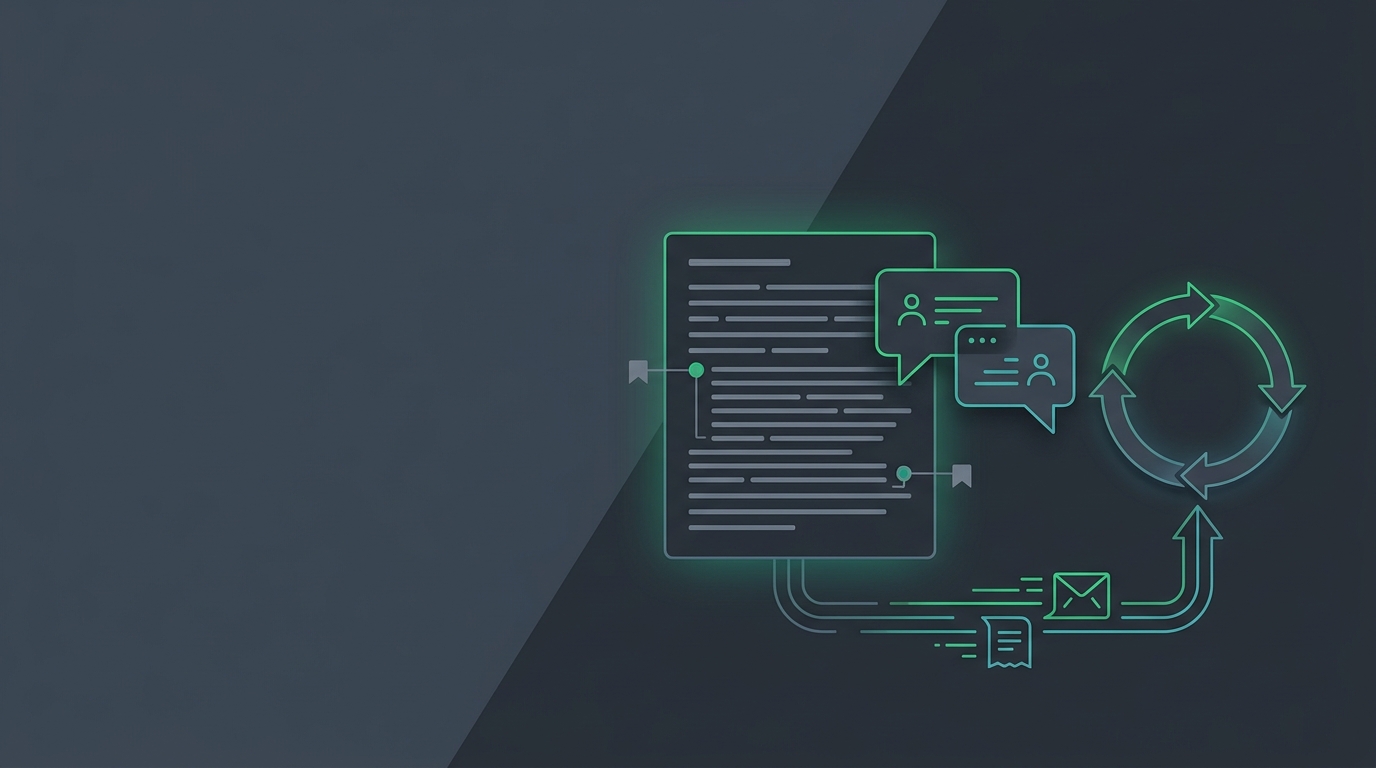
There's a gap between reading something and knowing it — and most study tools do almost nothing to close it. You read a chapter, highlight a few sentences, and move on. Weeks later, when you actually need the knowledge, the memory is thin and the highlights mean little without their context. LearnBook is built around a different model: every source you compile gives you both an AI tutor grounded in that specific material and a spaced-repetition review system that keeps the knowledge accessible long after your first read. Together they form the loop that turns reading into mastery. This is the core of the using LearnBook experience.
Your AI Tutor Is Grounded in Your Source
The AI tutor in LearnBook is not a general-purpose chatbot that happens to be available while you study. It's a tutor that has read your specific compiled source and answers every question by reference to it. When you ask a question, the tutor draws on the passages in your document — not on general training knowledge — and cites the specific section or passage that supports its answer.
This distinction matters enormously in practice. A general AI assistant answering a question about your biochemistry paper might give you a technically accurate response drawn from its training data, but that response isn't necessarily what your paper says, and it may contradict the framing or argument your course is built around. LearnBook's tutor stays close to your source by design, which means its answers are traceable, verifiable, and directly relevant to what you're actually studying.
Asking Questions That Deepen Understanding
The most valuable use of the AI tutor isn't asking it to summarize what you just read — it's using it to probe the parts you didn't fully understand. Some patterns that tend to be productive:
- Ask for an explanation of a term or concept from the source. "What does the paper mean by 'competitive inhibition' in this section?" produces a grounded explanation tied to the author's specific usage, not a textbook definition that might use different terminology.
- Ask why something is true. "Why does the author claim that X leads to Y?" forces the tutor to trace the argument rather than just restate the conclusion.
- Ask for a simpler explanation. "Can you explain this mechanism in plain language?" is a legitimate and useful question. Understanding a concept well enough to hear it explained simply is a step toward understanding it well enough to explain it yourself.
- Challenge a claim. "Is there a counterargument to this?" can help you understand where the source's argument is strong and where it relies on assumptions.
The tutor uses a Socratic approach for conceptual questions — rather than simply delivering the answer, it may ask what you already understand about a concept before filling in the gaps, encouraging you to construct an explanation rather than just receive one.
Citations: Why They Matter
Every AI tutor response includes a reference to the passage in your compiled source that supports the answer. This isn't a cosmetic feature — it's a trust mechanism. Because you can always check the citation, you can catch cases where the answer has drifted from what your source actually says. You can also use citations as navigation: if a tutor answer references section 3.2 of your document, you can jump directly there and read the surrounding context.
The citation discipline also reinforces a good study habit: getting in the practice of checking where a claim comes from, rather than accepting it on authority, is exactly the kind of critical engagement that makes knowledge transferable rather than brittle.
How Spaced Repetition Closes the Loop
Reading with an engaged AI tutor deepens your initial understanding. Spaced repetition is what ensures that understanding survives over time. LearnBook schedules your flashcard and quiz reviews using the FSRS algorithm — a modern spaced-repetition scheduler that models your memory's decay curve for each individual item and schedules the next review just before your recall is likely to fall below a reliable threshold.
The practical result: you review items less often as you get better at recalling them, and more often when you're struggling. The schedule adapts continuously to your actual recall performance, which means the review queue reflects the real state of your memory rather than an arbitrary calendar. To understand the math behind this, see our explanation of what spaced repetition is and how FSRS works.
The 21-Day Memory Loop and Study Streaks
LearnBook's review system tracks your activity across a 21-day memory consolidation window. The first three weeks after encountering new material are the most critical for long-term retention: reviews spaced across this window can move a memory from fragile short-term storage into durable long-term recall. The 21-day loop makes this window explicit and helps you see where you are in the consolidation process for each compiled source.
Study streaks and XP track your consistency: showing up for your scheduled reviews each day, even briefly, builds the habit that makes spaced repetition effective. A ten-minute daily review session, sustained over three weeks, does more for retention than a three-hour marathon cramming session the night before you need the knowledge.
Cross-Book Review and Mastery Trends
As you compile more sources, your review queue draws from all of them. Cross-book review sessions interleave cards from different sources in the same study session, which has a well-documented benefit: recalling the same concept in different contexts strengthens the memory more than practicing in a single context. A concept you first encountered in a lecture video, then revisited in a paper, and later recalled alongside a related concept from a third source becomes more robust with each cross-context retrieval.
Your mastery trend for each compiled source shows how your recall performance has evolved over time — not just whether you got cards right today, but whether the proportion of material you can reliably recall is growing. This is a more honest measure of learning than a quiz score, because it reflects the durable state of your memory rather than your performance when the material is fresh.
From First Read to Long-Term Mastery
The full loop looks like this:
- Compile your source. LearnBook parses the material, builds the outline, generates flashcards and quiz questions, and makes the AI tutor available.
- Read and ask questions. Work through the compiled source actively, using the AI tutor to clarify anything unclear. This builds the initial encoding.
- Do a first review pass. Go through the generated recall items soon after your first read. Your recall is still relatively fresh, which means this session is fast — but the act of retrieving the information, even when it's easy, strengthens the memory.
- Return for scheduled reviews. The FSRS queue brings items back at the right intervals. Some items return the next day; others not for a week or more. Each retrieval practice session takes only minutes but accumulates into durable retention.
- Use the tutor for struggling items. When a review surfaces a card you can't recall, go back to the AI tutor with a question about that concept. The tutor grounds its answer in your source, so you're reinforcing understanding at the same time as you're refreshing the memory.
- Track your mastery trend. Over weeks, watch the mastery curve for your compiled sources rise. Items that were once difficult shift to easy maintenance reviews, and new material can be compiled into the same loop.
What LearnBook Is Not
It's worth being explicit: LearnBook is a learning and retention tool, not a shortcut around learning. The AI tutor answers questions about your material so you understand it more deeply — it doesn't write essays or produce work you submit as your own. The review system schedules practice so you retain what you've studied — it doesn't replace the study. The goal is mastery, which means the system is most valuable when you engage with it actively: asking real questions, genuinely attempting to recall before checking the answer, and returning for reviews even when it would be easier to skip them.
Compile your first source in LearnBook and experience the full loop: read with a tutor that knows your material, generate recall items grounded in what you've studied, and let the FSRS schedule bring you back at the moments when review does the most good. That's the path from a single reading session to knowledge that stays with you.
Share
Related Posts
Using LearnBook
Upload a PDF, paste a web article, drop in a YouTube link or your notes — LearnBook compiles any source into a structured, studyable book.
2026-06-18T14:12:45+08:00
Using LearnBook
LearnBook turns any source into flashcards and quizzes grounded in the original text. Here's how to generate and use them.
2026-06-18T14:12:45+08:00